
OVERVIEW / TECHNICAL
Choked flow in liquid control valves is a predictable, standards-defined condition that often leads to cavitation damage. When internal pressure drops below vapor pressure, vapor bubbles form and collapse violently, eroding trims, seats, and bodies. Industry standards such as ISA-75.01.01 and IEC 60534 provide calculation methods to predict and prevent these destructive conditions. Understanding these engineering principles is essential to protecting valve internals and reducing lifecycle costs.
Choked Flow Defined by Industry Standards
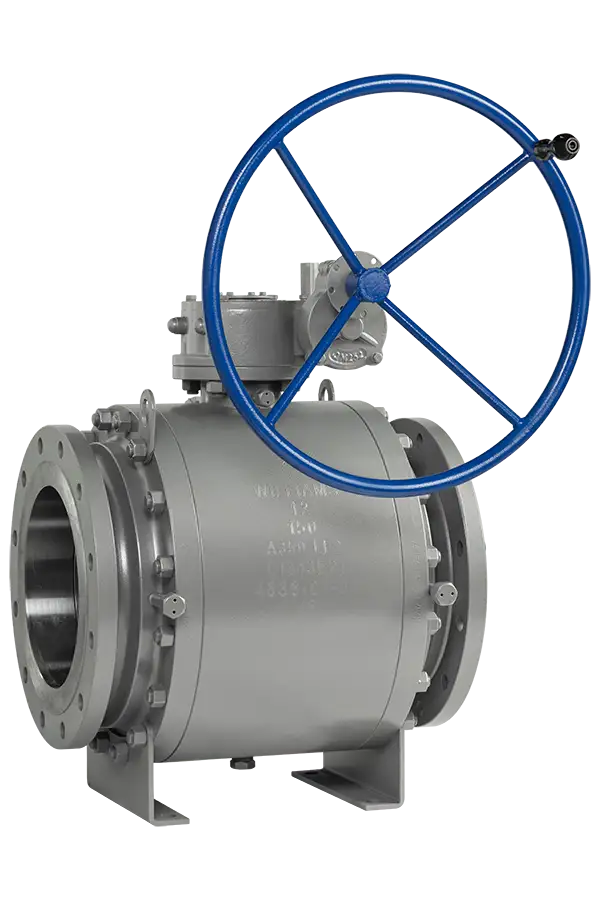 Choked flow is not a vague operating issue — it is formally defined in control valve sizing standards. According to ISA-75.01.01 (Flow Equations for Sizing Control Valves) and IEC 60534-2-1, liquid choked flow occurs when further reductions in downstream pressure no longer increase flow rate because the vena contracta pressure has reached the liquid’s vapor pressure.
In gas applications, choked flow occurs when the velocity reaches the speed of sound (Mach 1). In liquid systems, however, the concern is cavitation — not sonic limitation.
Key governing standards include:
• ISA-75.01.01 / IEC 60534-2-1 – Control valve sizing equations
• IEC 60534-8-2 – Noise prediction for hydrodynamic flow
• ANSI/FCI 70-2 – Control valve seat leakage classifications
• Crane Technical Paper No. 410 – Flow of Fluids through Valves and Fittings
These documents provide the framework for predicting when cavitation and choking will occur.
The Role of Pressure Recovery Factor (FL)
One of the most critical parameters in ISA and IEC sizing methodology is the pressure recovery factor (FL). This dimensionless value reflects how much pressure recovers downstream of the vena contracta.
Per ISA-75.01.01, liquid choked flow begins when:
ΔP ≥ FL² (P1 − Pv)
Where:
ΔP = pressure differential
P1 = upstream pressure
Pv = vapor pressure of the liquid
A lower FL value indicates higher pressure recovery and increased cavitation risk. Globe-style control valves typically have higher FL values than rotary valves, making them more suitable for high differential pressure liquid service.
Understanding FL during specification is essential to preventing destructive vapor formation.
How Cavitation Physically Damages Valve Internals
Cavitation damage mechanisms are well documented in fluid dynamics research and industrial standards. When vapor bubbles collapse downstream of the vena contracta, they generate localized microjets that can exceed 1,000 PSI in impact force.
According to hydrodynamic cavitation studies referenced in IEC 60534-8-2:
• Bubble collapse creates shock waves
• Surface pitting begins microscopically
• Erosion accelerates with turbulence
• Vibration levels increase as damage progresses
Unlike flashing, where vapor remains in the downstream flow, cavitation involves bubble collapse within the valve body — making it far more destructive to internal surfaces.
Commonly damaged components include:
• Valve plugs and cages
• Seats and sealing surfaces
• Body walls
• Downstream pipe walls
Over time, cavitation leads to leakage, instability, and structural weakening.
Cavitation vs. Flashing: An Important Distinction
Standards differentiate between cavitation and flashing:
Cavitation occurs when pressure recovers above vapor pressure after the vena contracta, causing bubble collapse.
Flashing occurs when downstream pressure remains below vapor pressure, preventing bubble collapse but causing high-velocity two-phase erosion downstream.
ISA-75.01.01 provides calculation methods to determine whether the operating condition will produce:
• Non-choked turbulent flow
• Incipient cavitation
• Fully developed cavitation
• Flashing
Proper classification determines trim selection and material requirements.
Acoustic and Vibration Consequences
Hydrodynamic noise prediction methods in IEC 60534-8-2 describe how cavitation significantly increases sound pressure levels. As bubble collapse intensifies:
• Noise can exceed 100 dBA
• Structural vibration increases
• Fatigue risk to piping supports rises
Excessive vibration not only damages the valve but can compromise system integrity and safety compliance.
Economic Impact of Choked Flow Damage
Failure to apply ISA/IEC sizing equations correctly can result in severe lifecycle cost increases.
Direct impacts include:
• Frequent trim replacement
• Increased maintenance intervals
• Unplanned shutdowns
Indirect impacts include:
• Reduced process efficiency
• Energy losses from instability
• Safety and compliance risks
Crane TP-410 emphasizes that improper pressure drop allocation across valves is one of the most common contributors to premature failure in liquid systems.
Engineering Solutions Based on Standards
Preventing cavitation requires adherence to recognized sizing and design methodologies.
Multi-Stage Pressure Reduction
IEC 60534 recognizes multi-stage trim designs as an effective method to prevent the vena contracta pressure from falling below vapor pressure. By dividing the total pressure drop into controlled stages:
• Velocity is reduced
• Pressure drop per stage is limited
• Cavitation intensity is minimized
Anti-Cavitation Trim Designs
Engineered cage trims with drilled-hole patterns or tortuous flow paths distribute energy more evenly, lowering local pressure gradients. These designs are specifically developed for high differential pressure liquid service.
Correct Valve Sizing
ISA-75.01.01 flow equations ensure the selected valve operates within safe pressure limits across the full operating range, including worst-case scenarios.
Material Selection
While hardened materials such as Stellite overlays and duplex stainless steels improve resistance, material upgrades should support — not replace — proper hydraulic design.
Best Practices for Specifiers and Engineers
To reduce the risk of choked flow and cavitation damage:
• Perform full ISA/IEC sizing calculations
• Verify vapor pressure at operating temperature
• Review FL values carefully
• Consider worst-case pressure differentials
• Apply multi-stage trims where required
• Evaluate noise predictions per IEC 60534-8-2
An engineering discipline during specification prevents costly failures later.
Protecting Valve Internals Through Informed Design
Choked flow and cavitation are not random mechanical failures. They are predictable hydraulic phenomena governed by internationally recognized standards. When engineers apply ISA-75.01.01, IEC 60534, and established fluid mechanics principles, cavitation damage can be minimized or eliminated.
At Williams Valve, we use industry-standard sizing methodologies and engineered trim solutions to protect valve internals from destructive choked flow conditions. By aligning valve selection with proven standards, operators extend service life, reduce maintenance costs, and improve overall system reliability.
Understanding the standards behind cavitation is the first step. Applying them correctly is what protects your investment.